
India’s rapidly evolving digital economy has prompted a significant overhaul of its data protection framework. The introduction of the Digital Personal Data Protection Act (DPDP Act) 2023 marks a pivotal moment in the country’s approach to privacy and data governance. As one of the largest and fastest-growing digital markets globally, India’s new data protection law has far-reaching implications—not just for domestic companies, but for global businesses that operate in or handle the personal data of Indian citizens.
For multinational organizations, understanding and complying with the DPDP Act is no longer optional. The law introduces new compliance obligations, cross-border data transfer regulations and hefty penalties for non-compliance.
The DPDP Act is India’s first standalone data protection law, designed to protect the personal data of individuals (referred to as “Data Principals”) and regulate the processing activities of organizations (referred to as “Data Fiduciaries”).
Key objectives of the DPDP Act include:
With over a billion digital users, India represents a massive market. Any company-regardless of where it is based-that processes personal data of individuals located in India falls within the scope of the data protection laws in India. This includes global tech firms, e-commerce platforms, SaaS providers and any cross-border service provider with access to Indian users’ data.
The Digital Personal Data Protection Act, 2023 (DPDP Act) is India’s comprehensive privacy law designed to safeguard individuals’ digital personal data while enabling organizations to process it responsibly. Businesses operating in India—or handling the personal data of Indian residents—must comply with its provisions.
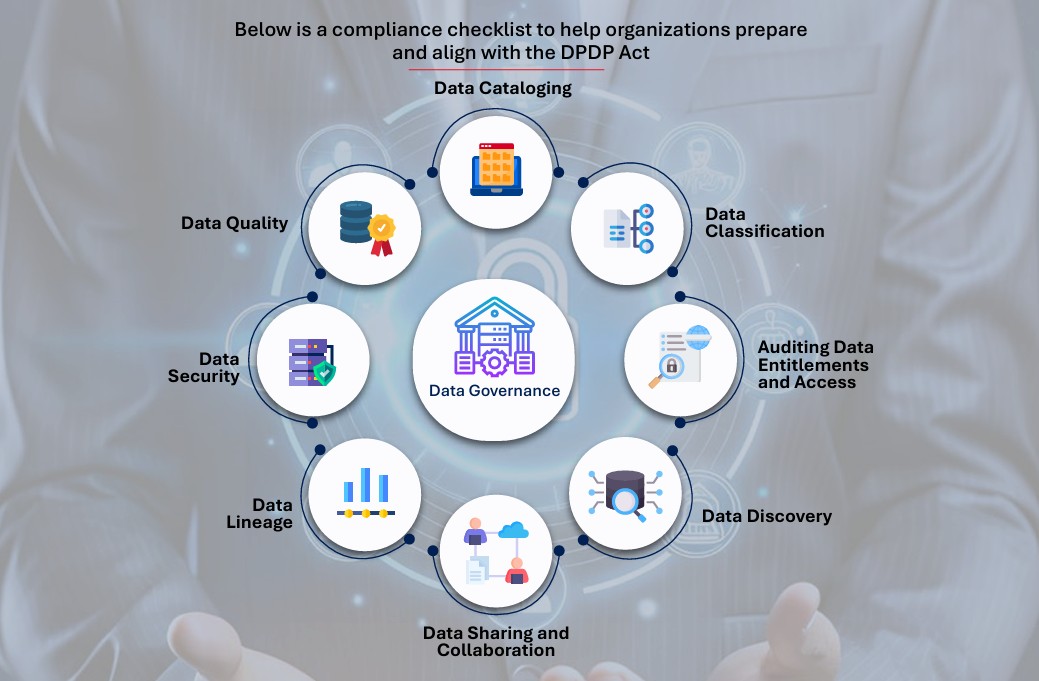
Below is a compliance checklist to help organizations prepare and align with the DPDP Act:
Data Principals enjoy the following:
The Act introduces a tiered framework:
The DPDP Act largely permits cross-border transfers unless restricted by government notification.
A. Get Ahead with Readiness
B. Plan for Governance
India’s sector-specific regulations (RBI for finance, TRAI for telecom, healthcare rules) remain in force and dovetail with the DPDP Act.
Final Thoughts
The Digital Personal Data Protection Act, 2023, marks a significant development in India’s approach to privacy and data regulation. For global businesses engaging with Indian markets or handling the data of Indian residents, the Act introduces clear responsibilities and heightened expectations around data governance.
Rather than viewing compliance as a one-time obligation, organizations should approach the DPDP Act as part of a broader shift toward more transparent and accountable data practices. Early preparation through legal assessments, operational updates and internal governance can help businesses align with the law and adapt to its evolving requirements.
As India continues to refine its digital regulatory landscape, maintaining compliance with the DPDP Act will be essential for sustainable operations and long-term stakeholder trust.